How We Collect & Learn From Brainwaves
How do I start with neurofeedback?
A comprehensive assessment is where neurofeedback therapy begins. The assessment allows doctors to determine whether a client’s brainwave patterns are different from normal. Based on your brain map results, we then create a restorative plan of care. Each assessment provides the doctor with neurofeedback training protocols. These protocols are designed to retrain the brainwave patterns towards normal. The result of rebalancing these brain waves restores health, healing and functionality for lasting results.
Read Your Mind
During neurofeedback sessions, doctors are actually able to identify abnormal brainwaves.
What Does it Mean – Slow, Idle, Fast?
Slow Processing
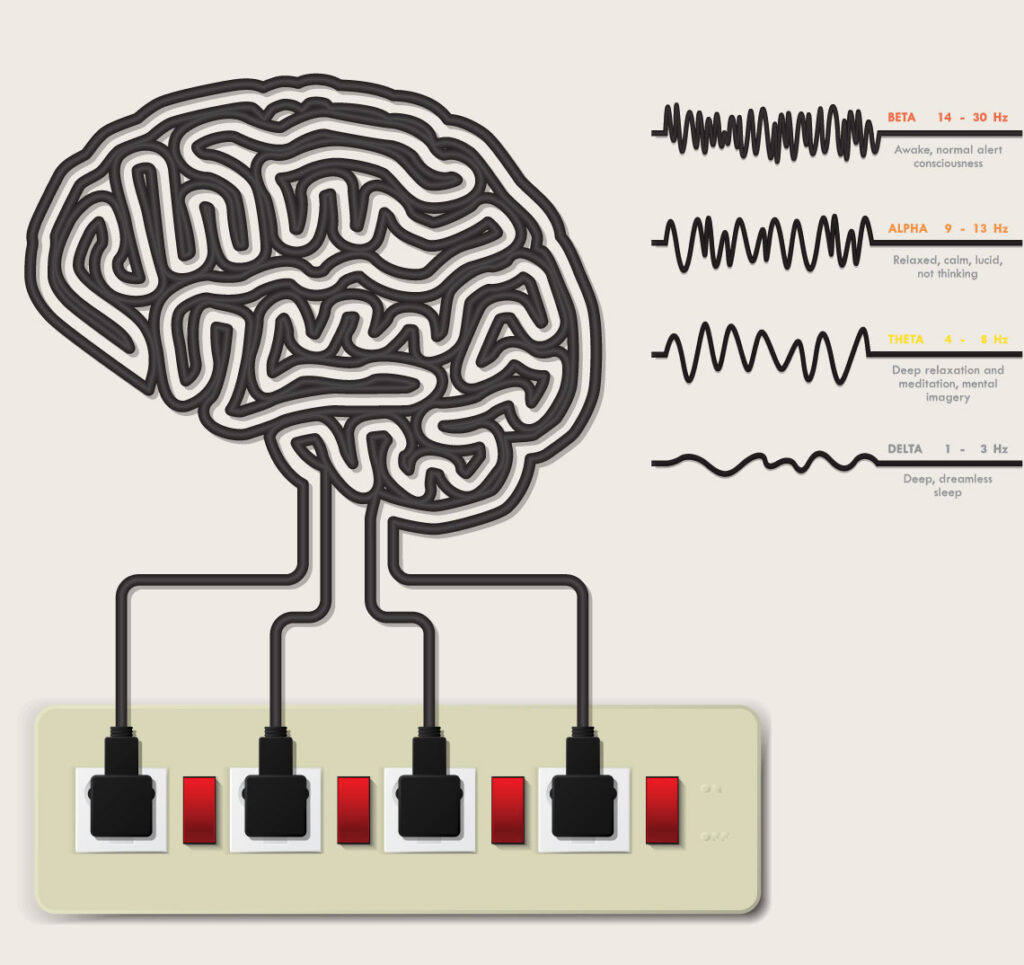
The brain produces consistently higher magnitudes of delta and theta waves when it is in a slow processing state such as when it is relaxed or in deep sleep. Delta represents the slowest processing speed. Delta frequency is 1-4Hz, while theta frequency is 4-7Hz. Theta waves are produced consistently during deep relaxation.
Idle Processing
The brain produces consistently higher magnitudes of alpha waves when the brain is in an idle state. This is why alpha is sometimes referred to as the idle brainwave. Alpha represents a slightly faster processing speed (8-12Hz). When the brain is healthy and well regulated, it produces more alpha waves on the right than on the left side.
Fast Processing
The brain produces consistently higher magnitudes of beta waves when the brain is externally focused, alert, involved in critical reasoning, thought and concentration. Beta represents the fastest processing speed (12-30Hz) and when the brain is well regulated, it produces more beta waves on the left than on the right side.
What Conditions & Why are So Many Different Ones Helped by Neurofeedback?
Many disorders are caused by poorly functioning patterns in the brain. Now that extensive research has shown the brain can restructure itself and learn more adaptive patterns at any age, the likelihood of symptom improvement becomes much more understandable. Neurofeedback is actually changing imbalances and altering brain pathways, not targeting specific disorders. This amazing ability of the brain is particularly noticeable in cases of traumatic Brain Injury (TBI), Stroke or other physical trauma to the brain. Regardless of whether certain areas of the brain are overactive or underactive, Neurofeedback can encourage the brain to self-regulate and ultimately produce more healthful brainwave patterns and change thinking and behavior patterns.
Understand Your Brain
Understand the symptoms that may be associated with specific brainwave imbalances.